
Why Everything Feels Empty Even When Life Looks Perfect
This piece explores why so many professional women feel empty despite doing everything “right.” The issue isn’t burnout or failure, it’s misalignment. Years of living in survival mode disconnect you from your inner self, while unprocessed emotions become stored in the body, creating tension, exhaustion, and a quiet sense of disconnection.
Through the conversation, it becomes clear that real healing doesn’t come from pushing harder or thinking your way out, it comes from slowing down and allowing yourself to feel what’s been suppressed. When emotions are acknowledged instead of avoided, the body begins to release stored tension, creating space for clarity, peace, and reconnection.
The path forward is not about fixing yourself, but about returning to yourself by listening, feeling, and no longer doing it alone.






In this episode of The Journey of an Awakening Spirit, Kathleen sits down with Ann Hince to explore a truth most high-achieving women never hear:
You’re not broken.
You’re out of alignment.
If you’ve been doing everything right, showing up, succeeding, holding it all together, but still feel empty, heavy, or disconnected… this conversation will land deep.
What This Episode Is Really About
This isn’t about burnout.
It’s about the hidden cost of living in survival mode for too long.
When you suppress emotions, push through pain, and disconnect from your inner voice, your body holds onto everything you didn’t have space to feel.
And eventually… it catches up.
What You’ll Discover
- Why success can still feel empty when you’re out of alignment
- The difference between burnout and emotional misalignment
- How unprocessed trauma and emotions get stored in the body
- Why “just thinking positive” or pushing harder doesn’t work
- The real reason emotions feel overwhelming and why that’s actually a good sign
- How childhood experiences silently shape your adult reactions
- The connection between body tension, stored memories, and emotional triggers
- Why feeling your emotions (instead of avoiding them) is the key to healing
- How methods like EFT (tapping) can help release stored emotional energy
- What it actually means to “come back to yourself”
The Deeper Truth
Most people aren’t stuck because they don’t know what to do.
They’re stuck because they’ve been trying to do it alone… while ignoring what their body has been trying to say all along.
Your anxiety.
Your heaviness.
Your emotional waves.
They’re not problems.
They’re signals.
A Moment That Hits Home
There comes a point where you realize:
You didn’t lose yourself.
You just learned how to survive without listening to yourself.
And now… your body is asking you to come back.
Key Takeaway
Healing isn’t about fixing yourself.
It’s about allowing what’s been buried to finally be felt so it can be released.
Because the moment you stop suppressing…
is the moment things begin to shift.
Resources & Next Steps
- Connect with Ann Hince on YouTube to explore her work on releasing stored emotional tension
- Join Kathleen’s community: skool.com/i-am-the-light-sanctuary/about
- Explore deeper emotional and energetic alignment tools inside the community
If This Episode Spoke to You
There’s nothing wrong with you.
You’re not too much.
You’re not behind.
You’re not broken.
You’ve just been carrying more than you were meant to carry alone.
And this is where it starts to change.
skool.com/iamthelightsanctuary/about
www.kathleenmflanagan.com
www.youtube.com/@KathleenMFlanagan
Dancing Souls Book One - The Call
Dancing Souls Book Two - The Dark Night of the Soul
Dancing Souls Book Three - Awakened
www.awakeningspirit.com
www.grandmasnaturalremedies.net
De-Stress Meditation
kmf@kathleenmflanagan.com
Kathleen Flanagan (00:49)
You wake up, nothing is wrong, but something feels off and you can't explain it. You're doing everything right. You show up, you handle it, you keep it all together. From the outside, you look like the one everyone wishes they could be, but inside it's quiet, too quiet. And it's not that peaceful quiet, it's that kind that feels empty.
Like you're living a life that looks good, but doesn't feel like yours anymore. So you start asking the questions that you don't say out loud. Why am I still tired? Why does this feel so heavy? Why doesn't any of this actually feel good? And here's the part no one tells you. You're not broken, you're just out of alignment. And when you're out of alignment, you can achieve everything and still feel nothing.
And that's what we're gonna talk about today, not burnout, not failure, misalignment. Because the problem isn't that you're not doing enough, the problem is you've been doing everything from survival. And survival disconnects you from the very part of you that knows who you are. Hello everyone and welcome to the journey of an awakening spirit. I'm Kathleen Flanagan and I'm your host. I help professional women come back into emotional and spiritual alignment without burnout.
overthinking it and doing it in three days. So today I'm going to show you exactly what's happening, why you feel this way and how to come back to yourself without blowing up your life to do it. And if something in you is already saying, this is me, there's a deeper step waiting for you. Today I have Anne Hens in the room with us. Imagine releasing decades of stored emotions and feeling truly at peace in your own body.
Ann Hince (02:28)
Something in you is already saying, this is me. There's a deeper step waiting for you. Today I have Ann Hens in the room with us. I've not been releasing decades of story motions and feeling truly at peace in your
own life. Ann Hens has done exactly
Kathleen Flanagan (02:44)
Anne Hins has done exactly
that, using awareness to shift her skull bones, grow close to an inch in her 50s and transform her life from the inside out. She teaches listeners how to connect with their inner truth, release tension and create lasting inner peace. Because what she teaches about the emotional patterns stored in your body, that's the piece that most people never see. And it might be the missing link between where you are
and finally feeling like yourself again. So let's get into it. Welcome, Anne. Hi. You're welcome. So, okay, you have a fascinating story to say the least, something that I've never really looked at, but I can understand where it's at. But first, I'd like you to...
Ann Hince (03:17)
Hi Kathleen, thanks for having me.
Kathleen Flanagan (03:38)
Tell your story of how you became an awakening spirit for our listeners and then we can go more into the story that you have of our lives.
Ann Hince (03:48)
Okay, yeah, where I've got to now, I didn't know it was possible to get here. So that's why I like to share my story, because I want other people to do this too, because I'm not the only one. So I started out with trauma. I was born with my right foot up against my right shin. And that had to be released over the first six weeks. And then I was handed over for adoption. I was adopted. And I was adopted into a family that already suffered a trauma.
because they'd adopted my brother who was, well, they'd adopted a boy who was to become my brother, who was two, and then they adopted a little girl and the birth mother changed her mind. So they had to give that little girl back and I was the replacement into the family for that little girl, for that loss. So there was a lot of trauma and emotions in that first few weeks of my life. Of course, I didn't know at the time how much that follows you through, but it does. And then,
Kathleen Flanagan (04:33)
Mmm.
Ann Hince (04:46)
know, when, when my parents realized the same thing was not going to happen to them. So my, my birth mother was determined that she was not changing her mind. And then they left the country, we moved abroad, we lived in England at the time when we moved to Barbados, and then Sierra Leone, in West Africa. And when we were there, we had a house fire. And I was the one who opened my, well, I heard this noise.
and I didn't know what it was. I couldn't work out what it was. And I opened my eyes and saw the flames coming in through my wall. So I was the one that alerted everyone to this fire. And so that was a huge trauma at the time. I was four or five years old and just wanted my mother to hold me. And she was obviously too distraught to do that. you know, that was one of those things. And then, you life went on. We went from there. We went to Hong Kong. And when we were in Hong Kong at the age of nine,
I was sent to a boys boarding school in England, which is where my brother was going. So I was the only girl boarder at that school for the first year. And I was teased mercilessly by the boys, age nine through 13. So that was a very traumatic time for me. And then then we moved to Bahrain and back to England. And during my teenage years, both my parents became alcoholics. So life at home was hell.
I hated every moment of it. I would come back from school for the holidays, for the day, for a day I was happy to be home. And then it just all went to hell again. And then I don't want it to be back at school. And then the soon as I got to school, I hated it I wanted to be back home. So it's like, there was no peace there at all. And then when I was 19, I woke up one morning and found my mother dead on the bathroom floor. And that was kind of the big trauma on top of all the other smaller ones.
I just carried on with life because I was British, we just kept everything hidden. We never talked about feelings or emotions. So I just kept it all inside and I moved to the States when I was 21, kind of hoping that I'd leave it all behind in England, but it doesn't work that way. Yeah, damn. So I just carried on with life. I got married, I had kids. then ⁓ when I was in my early 40s, I had what I call the
business altercation with two other mothers at my boys school. And it was a silly thing really. I wanted to do something and they told me I shouldn't do it. And they told me I was wrong. And my mind just spun out of control just for three days and nights. I could not stop my mind spinning, just going over everything. You what I said, what they said, what I could have said differently, what I could have done differently, just all these different permutations. And it was at the end of that, I realized two things. First, this was not normal.
I didn't know anyone else who would have reacted that intently to something as small as that. And I realized it felt a little bit like how I would react when my dad would tell me I'd done something wrong. So that was the little opening, ⁓ gosh, maybe, maybe something from my childhood is still affecting me to this day. Which is funny to look back on because there was so much that was still affecting me, but that's the only opening that I was shown. And I took it and I ran with it.
And that started my journey.
Kathleen Flanagan (08:13)
That's a journey.
Ann Hince (08:14)
That's the start of the journey. That's the start of the unwinding at that point. Yeah.
Kathleen Flanagan (08:20)
And
that's usually what happens. I think a lot of people don't realize it. I think that we've got a epidemic, so to speak, going on about that right now because of the amount of light and the us versus them and the dark versus the light and the darkness within each of us that has to come to the light to change. And I think we're all being challenged in some way with that. And I think that's why so many of us are talking about those childhood traumas.
because I know for me last weekend, I uncovered some stuff I didn't even know was there. I was like, what, what, what? You know, it was, and I've been doing the work for my whole life, right? But when you go into this, I don't really, okay, I have to sit with this because what happened, it was like this, volcano of lava. was like, it was burbling up and I wasn't angry. I just cried. It was like, I just released like,
Like this is from the womb, okay? This is like womb stuff that came up. So you know I'm at the core now. And I just remember just crying and being angry and feeling like the way I was like, just wish my parents were dead because as for a little kid, that's all you knew how to deal with. Cause that's our nervous system. We don't have any capacity for anything other than
Just make it stop. Just make the pain stop.
Ann Hince (09:54)
Yeah, and that's when
we start to go out of alignment because we ⁓ compensate for that. We hide it. We find a way to work with it and to hold it down.
Kathleen Flanagan (10:05)
Right. And so
that's why I say, you know, look at I'm a very accomplished woman. mean, people are shocked at what I've accomplished. Does it mean anything? No, not really. What means something is my dance championships, because, you know, that's the one thing that I've always wanted to do was be a dancer and.
So that meant something even though I was still out of alignment. It was also what started me back on my journey. Ballroom dancing really started that journey back. That's where the books came from. That's where the deep healing started. That's where the angst started. That's where everything started and healed. And it's been up and down, up and down, up and down. And when my father died last year, it was a whole new level. And even though I may know it up here and I may know it here and I could do what I want,
there was still this burbling of emotions like, whoa, where is this coming from? And so that's why I figured I can take you deep. You obviously can go very deep, but you're doing it in such a different place because I'm in middle of a detox and I'm noticing the changes in my body just from detoxing because you know, the toxins in our body hold on 20 years of memory and I'm like, where did this, why is this showing up? Why is this person, they're gone, know, kind of thing.
So to hear that what you released in your body from tension also gained so many more. And I think that's what's really cool because I'm really doing a lot more studying on that tension in the body, the holding of the body, the things that we're holding on don't know we're holding on. And sometimes it's the food, the bugs, the parasites in our bodies that are holding on for us too. I mean, when you think about the depth of what we are here on this planet to learn is like
Mind blowing. So you are so appropriate and so perfect for the show right now because I'm in the final two weeks of this detox and I'm like, I'm so friggin done with this. But then when I'm eating foods I'm not used to eating and haven't eaten, it's like, this texture is weird or I don't like this anymore. And I'm throwing stuff away of little things that we've had that we haven't used that I'm not gonna use anymore. So I would love to learn more about
Ann Hince (11:56)
Yeah.
Kathleen Flanagan (12:23)
how and what that journey of the tension in your body, because I never would have thought the body was, I know the body carries stuff, don't get me wrong, but I never understood how it carried the way it is. And now you're bringing a whole new level to the table.
Ann Hince (12:38)
Yeah.
subconscious mind holds so much in it. And I never knew that at the beginning, right? So I'll go to the end, and then we'll go back and start again. So like, at this point, I'm releasing tension in my tissues and my bones. And sometimes a memory will pop up as I release that tension, because it's still connected at some level. But a lot of the tension is not it's, it's sub it's prior to verbal, you know, use of language. So I'm
Kathleen Flanagan (12:50)
Okay.
Ann Hince (13:11)
releasing at that deeper level. And there's deeper levels to go probably to I mean, I'm right in my skull, I can get somewhat in my skull in my awareness, but like not all the way in. So that's kind of the next level. And you're only shown a level at a time to work through. So we'll go back to the beginning now. So at the beginning, I just started working through my memories and my emotions, right? Because that's kind of the first thing, it's easier to grasp hold of them.
memories and emotions and triggers, you when we're triggered, there's emotion there. And we kind of know why we've been triggered often. And they're just words. So I worked through those first. And the way it happened was, after this altercation, I knew I had to change, I was determined to change. And I happened to go to a doctor's appointment. And, you know, he was a holistic physician. So he had more tools in his toolbox than many doctors do.
And he recognized I was more stressed than I should be. So he asked me on a scale of zero through 10 what my stress level was. And I said eight. And then he asked me why. And that's when I said, I was finding my mother dead on the bathroom floor when I was 19. And at this point, I'm 40 something. So it was a long time that I'd held all these tears in. And he used this technique called EFT, which is short for emotional freedom technique. It's also called tapping. And he tapped with me about my mother's death for about 15 minutes.
And I was able to let the tears out and tell the story. And I walked away from that appointment, being able to tell the story in my mind without the tears there for the first time ever. And that's when I realized we hold those memories and those emotions physically in our body and we can let them go. So after that one experience, I wanted to try it out. So I tried it out by about giving my cat an injection, which was such a scary thing for me.
And I tapped about it. I tapped about all the aspects of it. So I tapped about my hand shaking when I gave him the injection, tapped about my fear of hurting him. And I tapped about all my memories from all the injections I had had from moving around the world. And the next day, when I gave him that shot, the needle just slid right in. There was no shaking or fear inside of me at all. And that's when I realized, OK, that's what I want. I want that change.
about every aspect of my life so that I could be at peace on the inside, not be this afraid mother that I was all the time. So I started doing it. started noticing during the day when I was emotional, and then I would tap about it. would tap about what happened and how I felt, and I would bring myself back to peace. Then I'd carry on with my day and do it again. So I started to become more peaceful.
I really enjoyed the change. So I went more and I wanted it faster. So I'd heard this this peaceful, peaceful, I can't remember something peaceful procedure. And it's where you write down every memory, every childhood memory that's emotional from your life, like not just childhood, but your whole life. And I wrote everything down, it was page after page after page of things that I could remember that had happened or triggered to me.
And I tap through one each night for about an hour to an hour and a half each night until I've gone through them all. And the changes were just huge. My mind, which had been so busy and so critical and judgmental, mostly of myself, changed. Those thoughts that used to run in my mind were no longer there. And that's when I realized that lot of them had been my dad's words that I've taken on as my own and said just repeated.
couldn't see that until they'd gone. And then my mind was much quieter, which I'd never experienced before. So what I realized EFT is doing, it's opening up the subconscious mind. And as that happens, you know, at the same time, your depth of awareness deepens. So I became aware of my emotions, which I hadn't been when I started, then I became aware of the physical sensations underneath the emotions.
So like where you hold frustration in your body, right? It's tension somewhere and we give it the name frustration. So this is reversing that process, reversing the disassociation from the body. So I started to learn where I held my emotions in my body. And at that point, I didn't need to use EFT as much, I could have done, but I learned how to just feel my feelings, feel the sensations and allow it to release, the energy of it to release.
And I would just do that more and more. worked with collective traumas because I'd already done all my childhood. So things like we've got plenty of things these days, but back then it was things like 9-11 or the Loma Prieta earthquake that I was in. I would just bring those memories to mind, feel the sensations, allow the emotions to release. And at some point I went through Kundalini at this point. And then at some point I realized I could keep my awareness inside my body after the tension had released.
which was crazy at the time. I'd never heard of it. I didn't know what I was doing. I was really just playing. So I've done it once. I tried to do it again. And I realized I could until I thought a thought. The soon as I thought a thought, my awareness came out of my body again. So I kept playing around and trying to do it again. And I realized I could keep my awareness inside and I could move it inside. So I'd find a place that had tension versus a place that had no tension.
And then I would focus on the tension and just feel it and just allow it to release, which is exactly the same that I'd been doing with the sensations. And really, when you think about it, it's the same thing that I was doing with EFT, because you're focusing on something, you're allowing it to be, and then it releases. So I would just do that over and over again, different places around my body. And it took many, many months until I could put my awareness inside my head. And that was massive.
because the pain that I found that uncovered, it had been there all along, but I uncovered it in my left cheek was just almost unbearable. So intense. And it had been there my whole life since I was born with my right foot up against my right shin, because I could feel the pain and the tension go all the way through my body, down my right leg to my right foot. So that showed me how much we hold in our subconscious mind.
Kathleen Flanagan (19:43)
Mmm.
Mmm.
Ann Hince (19:56)
And it's there, we just don't have access to it until our body shows it to us. So then I just kept going. At one point, I was actually in a Starbucks at the time, was no one else around. And I was doing this work waiting for people to turn up. And I heard and I felt something release in my left cheek. And it felt like, and it sounded like all fabric ripping. Scared me a little at the time. So I went home.
did some research and I realized it's an adhesion in the connective tissue that was releasing. So I realized, okay, it's not hurting me in any way. I can keep going. So I did. And it just happened more and more and more. And it got to the place I could actually feel my skull bones relax. Now I hadn't known they weren't relaxed before, right? Cause we only know what we know. So it just kept going and over time, I...
Kathleen Flanagan (20:35)
You
I hope
Ann Hince (20:54)
had my husband measure me because I felt like I was looking from a different angle, right? That's how we know whether we've grown or not. And had I grown, and I had orthodontic x-rays that showed my skull bones had changed. And so that's what I do now. I work at the level of the bones. Yeah. There we go.
Kathleen Flanagan (21:15)
Wow, Anne, that's interesting. I do similar to that, but not quite like you do it, because when my father died and people are like, because he's a perpetrator, okay, and I was a victim. And they said, how are you doing? I said, it's complicated, because I didn't know how to explain what was happening. I could feel like all this stuff like right in here in my chest area.
and I'm just feeling it, but I didn't know what it was. was like numb is what it felt like, but I sat with it. It wasn't comfortable. I was depressed. I wanted to commit suicide. And I understand why all that was there because he was the perpetrator. And scientific studies say within six months of a perpetrator's death, a victim will follow because that became an identity.
And I didn't know that at the time. I'm just like, why am I doing this? I'm happy with where I am. My life is good. You know, I'm like all this stuff, but yet I'm feeling this feeling and I'm trying to understand it. And then it was like, and then I became very angry. This is what was came up. was, I was very angry because now the little girl who always was always hoping didn't even know. I didn't even know this is what I wanted.
that the man that I wanted as my father, he can't be my father because he's now gone. So that little girl, this is all little girl stuff. And I was devastated because he really is dead. He's never coming back. Now the adult me is like, what the hell's wrong with you? And I realized I couldn't do that to her, right? Of all people, I cannot do that to her. But you know, it's, I mean,
I was fighting a little girl, four, five, six, seven years old. I'm fighting this little girl and I have to allow her to release that because this didn't make sense because up here I'm like, I'm an adult. I'm successful. I'm this, I'm that. I'm okay that he's dead. I'm glad that he's dead because then I also realized, ⁓ I'm not looking over my shoulder anymore. Didn't even know I was doing that my whole life. I mean,
Ann Hince (23:39)
Yeah, it was subconscious.
Kathleen Flanagan (23:40)
I mean,
and I'm literally, I'm sitting here going like, always going like this. And I'm like, what am I doing? Never had a clue. And then as soon as I allowed the little girl to go through, then it was like the, all of a sudden, every emotion started coming up. It was like, I could name it, I could name it, I could name it. And it was like, just sat there and I felt almost flattened by it because it was so much. So when I did this thing over the weekend and it was in the womb of
Just, if you read my books and understand more about me, and there's a lot I haven't shared yet because I'm still working through some of it, but coming back into the womb and going, okay, unworthiness came from a lot of different reasons, a lot. I mean, I'm finding it was, lovable is the real core issue of me, that my mother didn't want me, my mother didn't love me, which is true. She denied it, but it was true.
But then there was this unworthiness level that also came, that came around money. Because see now, I'm sitting here in the womb, what do I know about money? Nothing, but my values came out around money that I was unworthy to receive money too. Now who thinks about that? Who understands? So like you're saying with your trauma in your womb experience with your foot up against your shin, and then it's triggering up here in your cheek,
I'm sitting here going, none of this computes in my mind, but yet I've lived it because of how I interpret it. And the first time when I did a womb thing about two years ago, I saw this little black thing coming towards me and it was just like smoke kind of thing. It was like, what it looked like. And I'm like, oh, that's a worthiness thing. And it went right into me. Like I observed this kind of stuff. So
When you say this, I understand that because I tell people to sit with the emotion. Don't analyze it, don't do anything, just sit and be with it and just feel it because once you feel it, you can start releasing it and it will tell you. Because I just sat with it, it was like, I just kept asking, what is this? What is this? And it just kept, I'm not going to tell you anything and you're just got to feel your way through this.
Ann Hince (26:04)
Yes.
Kathleen Flanagan (26:06)
That was
not fun feeling your way through it. But you know, you do get on the other side and then the freedom that I got on the other side was even more intense. now with the detox coming up, I'm sitting here going, God, some of this stuff that's coming up has to do with my father, not so much my mother, because I did so much of releasing of my mother at her time of death. But this is like more of my father's stuff, more of the deeper stuff of my daddy didn't love me.
What would my life really have been like if he did love me? You know, all these weird thoughts that I've always had, but never paid attention because it's not my life. So why worry about it? But I had to sit with it and I had to mourn. And God, that was not the easiest thing for me to do was mourn. But it wasn't mourning my father. It was mourning the life I didn't have that I thought I was going to have. And that's what I had to mourn.
And that was a deeper truth for me because how many times do we shove? I don't want to think about that. What would people think if they thought I was mourning a perpetrator? It wasn't my father. I didn't care that he died. I had tears. There were things that came up and I was angry and I went through all of the emotions, but spirit's the one that said, those tears aren't for your father, they're for you. You're crying for you because this is like, you're letting go of what
your life could have been, might have been, but it wasn't. You recreated your life and that's what you're crying is you have to let the past go to get to where you want to go. And you're saying the same exact thing,
Ann Hince (27:48)
Yeah, yeah, and those tears they need to come out because if we hold them in that's taking energy to hold them in that we can use for other things.
Kathleen Flanagan (27:57)
God, that was
so hard to let them out because you're fighting yourself in those tears because I'm going to fall apart. What's going to happen to me if I let them go? Because all of a sudden, all those paradigms that you may thought you have worked through, whole new other level shows up.
Ann Hince (28:15)
Yeah, which is a subconscious mind opening itself up to you. Yes, that's the next deeper level. So let me come back to one of the things that you were talking about there. Because, you know, over the years of doing this work, I've gone back and tried to work out what's been different about what I've done compared to other people so that I can help teach people to get where I am. Because I want other people to be here. And that's the feeling the feelings like letting the feelings be felt. So
In my journey, I had to do EFT first. And I often encourage people to do that if they don't have a deep level of self awareness. Like I could not have felt my feelings to begin with, I had to become aware of them first. So that's where the EFT helped me. But then I worked out I needed to feel my feelings. So like you said, allow them to be felt. But the one thing I did that was slightly different, and it was because I couldn't do it, right, so it was only my failure that allowed me to work this out.
I couldn't keep my focus on the sensations. So for me, I was like feeling frustration or fear. It was really, I think, fear of making a phone call or something like that, which is in my rib cage and my solar plexus. So I could feel it there. But the soon as I moved or the soon as I took a breath even, I would lose my focus on it. So what I realized I had to do was stop everything. The soon as I could focus on it, so feel that tension in my rib cage, I would...
Kathleen Flanagan (29:32)
Mmm.
Ann Hince (29:43)
I would hold myself like a statue. I would stop breathing, no more in-breath, no more out-breath, no movement whatsoever except feeling that tension in my solar plexus. And I would talk to it and I would soothe it. I would do whatever I could to keep my focus on it until I needed to take a deep breath, which then I would obviously do, or something shifted. And then I would do it again.
So I would just keep doing this over and over. So holding it at tension, giving it attention, like that one word's broken into two, at tension. I would hold it at tension until it released and then hold it until it released, just over and over until the emotion had released from the thought, right? So it's like, Buddha's talking about, about letting go of attachments, right? Letting go of the emotional attachment to the thought of, I'm afraid of making this phone.
And then of course it becomes easy to make the phone call because there's no more fear left. So that was the key difference that got me deeper. And that's what I do to this day when I feel tension in my bones and my jaw bones, wherever I'm working, I hold it at tension, focus on it until I feel a release, which is often these days a crack in my neck. And then I'll do it again and again. So that one piece is the key that got me where I am.
Kathleen Flanagan (31:05)
love to do that
because you know the one thing that I've noticed because on this detox I love my partner to death and I hate him at the same time because he's lost over 20 pounds and I just discovered today I lost two more pounds so I'm like okay I managed to get down to 11 pounds after 90 days and he's like well ahead of me but it took until the end and I knew it would take till the end.
And I realized that my body was holding on. My body is still holding on. And I've been doing similar to what you're saying at night of it's okay. You're allowed to let it go. And waiting to see if it's gonna talk to me, tell me what it is. What do I need to do to help it? And the only thing, and it hasn't talked to me because my body does talk, but it hasn't really said anything. So when I got on the scale this morning, I'm like, yeah, I'm probably gonna be this much weight.
you know, and then I looked down and it was like, I'm in denial. I mean, it was like that shocking thing because yesterday it was like, I'm just like, I just felt like all I did was like, just release so much water yesterday. And he was like, I mean, I drink the same amount of water every day. And it seemed like I must have doubled up on water intake yesterday, the way I was releasing the water from. And I realized, okay.
body starting to release because I'm giving it permission to do it on its terms because sometimes we have the body has its own consciousness and we have to trust the body. If I wanted to come along for the ride, I have to honor it. Also, I'm not letting fear in the way because it's like, what do you need? I'm here to help you. It's okay.
You know, I'm doing this for 90 days. Do you see what I've done for you in 90 days? Can you trust me now? Not that I've abused my body, but see the body doesn't think like that. It thinks and speaks totally different than any other way I've ever heard messages or whatever. It's different and we all have our unique language within the body. And so when it did that, I'm thinking, okay, so it's starting to trust me. Just a little.
just a little and I'm like, am so close to where I want to be now. You know, like it was hope, cause you know, and it's always surrender for me. Cause it's like, well, I'm probably just going to be this way the rest of my life. And I surrendered to it. And then it's like, ⁓ you surrendered. Okay. I'm going to drop two more pounds for you and shock you. I mean, it's, yeah.
Ann Hince (33:40)
Yeah, that surrendering
is meeting the energy and once it's been met, it will release.
Kathleen Flanagan (33:45)
Yeah. And
it's funny because, you know, you have to develop a sense of humor too.
Because, you know, we get so dogmatic about I got to do this, I got to do this. And me, I'm so focus driven because that's how I live my life. But I'm no. Have fun. Enjoy your life. Let it play. You want to play. That was the one thing that came out in the womb is I came here and I wanted to play. That is the last thing I have done in my life is play. So now I'm having to learn to play.
a little bit more and that's very hard and I may have forecasts that try to teach me to laugh and play a little more. I'm a slow learner some days, you know, but I'm...
Ann Hince (34:27)
I felt the same way and
I learned to play laser tag with my boys when they were growing up and I had so much fun. I've never had as much fun in my life.
Kathleen Flanagan (34:35)
And that helps
to release the body too because it's like it wants to play. It'll do what you want, but it needs to play too because that's part of who we are. That's what's supposed to make life fun is playing, but we don't do that. We're on our phones, we're working, it's all about the money, working for the man. No. No.
Ann Hince (34:57)
Yeah. Now a big part
of my journey has been noticing when we're trying to suppress something and not doing it, right? So if we are feeling angry or upset or we don't want to play, right? Then that's what I would work on with the tapping. It's like acknowledging and accepting, I don't want to play. That's stupid. I don't want to play, right? Whatever it is that's up and that's your body talking to you, right? It's those thoughts that you're having. That's your body.
Kathleen Flanagan (35:21)
Yep.
Ann Hince (35:26)
telling you what to work on right now.
Kathleen Flanagan (35:29)
Well, and I think yesterday, I was like, cause I want to do some landscaping in my yard because of our water bills are so high now. And I know it's across the country and I'm trying to put like native plants that are, because we're living in Colorado, so it's drought, you know, we're semi-desert. And I thought I'm going to go and just see, I know what I want to do. have an idea. I want to see what the plants are. And yes, it's still a little early, but it's okay. I need.
I wanted to get the creative juices flowing. I have an idea. I know what I got to do. It's not going to be easy. I'm going to probably piss and moan and complain the whole time, digging up the grass and, you know, laying a border and doing all this. But I love playing in the dirt at the same time and I love when they grow. So I get over my own stuff. But the whole point was as I got to there and there was a guy at the nursery and I dragged him all over the place. And then, you know what he said, because this is what I wanted and this is what he said.
Well, you know, on Saturdays, every Saturday we have a landscape designer bring your pictures and we can design it for you. I mean, they're not I'm not getting charged, but they can design it, lay it out, tell me what the best plants would be to look compliment and be pretty from spring to fall. Because I want all and then I want evergreens in the winter. So I want like a wide variety. And I'm like, this is what happens when you play and just do this, because it's like all of a sudden I get
a landscape designer and I've had somebody who did that once and they wanted $50,000 and it was like, yeah, in your dreams. ⁓ And here's this guy who does it for free just by coming in the nursery. Cause they know that they're kind of budding because maybe you might hire him and maybe I'll hire him for part of the hard work and not all of it. You know what I mean? You don't know, but see it's a win for me.
Ann Hince (37:20)
Absolutely.
Kathleen Flanagan (37:20)
And it wouldn't have happened
if I wasn't going, OK, I think I need to play a little more and let's go do this and let's have the creativity come out. It wouldn't have happened. And that's when magic starts. That's how I look at it. This starts becoming magical, but it's not magical. It's just what is natural. We just don't know it because we're so busy. No, I got to hold on to all of my stuff.
Ann Hince (37:40)
Yeah, it's being in alignment.
Yes.
Yeah, you start to become in alignment and then things start to align for you. Yeah.
Kathleen Flanagan (37:54)
Yeah,
it's really, it really is that piece. It's really that easy, folks. It really is that easy. It just sucks to be you when you're going through it. Having to feel. Yeah.
Ann Hince (38:03)
Yes. Yeah, you've got to clean out the darkness. You've got to look
at the past and clean it out because it's that is tension holding your body out of alignment.
Kathleen Flanagan (38:13)
It is, and
it's not fun, but the beautiful part about this, as you well know, Anne, is how many people were going through what we were going through when we learned it. That's the nice thing is that the younger generation, they can find people to help them guide them through it rather than figuring it out, doing it alone, three steps forward, two steps back. What did I do that I just?
It worked this time, why didn't it work? And having to remember what you did that made a big shift and then trying to go back and remember it because you've been trying so many different things.
⁓ Yeah, they kind of suck too. That sucked to be us too back then. ⁓ But it's becoming your powerful, it's your power. You become empowered. And if you've got somebody who can help you explain like where you're at, like with Sel and I on this detox together, I never thought I would have the conversations about bodily anything in my life. And him and I are
Ann Hince (38:50)
Yeah, I remember those days.
Kathleen Flanagan (39:19)
We're having the same experiences. have similar protocols, but not the same, but our bodies are still reacting the same. And we're having this, it, cause it was like, there's no way I could ever explain this to you. And vice versa, if we weren't in it together. So there was something about somebody being on the other side who understands what you're going, that you, it's like, you're not thinking, my God, I'm insane. If I tell anyone they're going to put me in the mental institution, cause I'm crazy. Cause I went through my life like that.
And I'm not crazy and you weren't crazy and the people going through it aren't crazy anymore because there's us.
Ann Hince (39:58)
Yes. And they, and yeah, and I think people know that they're ready to do something about it these days. Yeah.
Kathleen Flanagan (40:01)
We're the crazy ones and yet we're helping you!
I think so too.
So we're coming down to ending up the show, winding up the show. So how can people get a hold of you?
Ann Hince (40:19)
The best way is YouTube. Just come onto my YouTube channel, watch some videos. I'm there in the comments. You can ask me any questions in there.
Kathleen Flanagan (40:28)
Well, I want to thank you so much, Anne, for being on the show today. It was fun. It was kind of nice to get a different perspective about the body because I don't think I could put words into what I was experiencing until you talked about like how I sat with the emotions and yet here you are holding your breath because you had to ⁓ stay focused.
Ann Hince (40:57)
Yeah, it's tension.
Kathleen Flanagan (40:57)
because I mastered
that part of my emotions. So I could be doing whatever, but I'm still feeling like, what the hell is this? As I'm busying around because I could never get my attention off of this weird feeling.
Ann Hince (41:12)
It's literally tension stored in the connective tissue. That's what it is. Yeah.
Kathleen Flanagan (41:15)
Yeah. And
when it releases, it's like, you're like, thank God, you know, but then it's sometimes it's like, let the tears flow when they come because you know, when those tears are flowing, that means you're really close to manifesting something because I'm going to give you a tip folks. You sit there and you have a goal. It goes up seven layers into your, up the seven layers of consciousness out into universal mind. It finds what you want and it comes back through the seven layers of consciousness.
Ann Hince (41:20)
Yes
Kathleen Flanagan (41:44)
When it hits the sixth layer of consciousness, it hits the emotions. You stop the tears, you stop the rage, you stop whatever the emotion is, you stop your goal from manifesting. Allow the rage, the tears, whatever it is, because you're in an angst when it's ready to manifest. And so when that started to happen and I'm fighting the tears, it's like, no, let the tears flow.
If you have to talk yourself through those feelings, talk yourself through them. And yes, you may not like it. You may have whatever's going on. Acknowledge it, write it down because all those answers, because the answers are behind those emotions. Just like you said, Ann, everything's behind the emotions. And then you're breathing. It's like all of a sudden your shoulders drop. You're breathing deeper. Your chest is standing out. You're standing taller, more proud because you release some more.
tension in your body and that is what's so key and critical and I love the fact of how you started because it's a very simple tool. I didn't have EFT in my day because I'm older than you. had to like what the hell is this icky feeling I'm feeling. I had to figure it out on my own so yeah I'm a little further ahead on that part but the younger generation doesn't have to do what I do.
and then they can and you know how to start up and then they can continue on because it's all about just empowering all of us.
Ann Hince (43:14)
Yeah,
indeed. Yes.
Kathleen Flanagan (43:18)
So that's what I think is so cool about you coming on the show and sharing this because I got so much more insight because of how you talked and yet I'm not crazy folks, cause she just confirmed I'm not crazy. So if you think I'm crazy, she's crazy too then. And that's kind of how it is. So I love it. It's just great. And just having fun is the main thing. So if this is, if something in you said, is me, don't ignore that.
Ann Hince (43:32)
That's
Kathleen Flanagan (43:48)
Because the real problem isn't that you don't know what to do, it's that you've been trying to do it alone. And that's why nothing sticks.
Okay, lost it.
That's okay. I'm not going to worry about it. It doesn't matter. The whole point is, it doesn't you, you don't have to do any of this alone anymore. We're here. I'm going to have all the contact information in the show notes that you can reach in if you wanted to reach out to her. So, ⁓ and then please go to her website and also go to her YouTube channel.
And if you want to work with me or have to have any questions, feel free to reach out to me at school.com forward slash I am the light sanctuary forward slash about. And that way you can learn a little bit more, join the community. It's free. So you don't have to feel alone. And I want to thank all of you for joining us. And if this touched home for you, or if you know somebody, feel free to give them the link.
and let them know that they don't have to suffer alone because none of us need to be suffering and we shouldn't have to suffer at all. So I wanna thank you again for joining me and I will see you all next Tuesday at 4 p.m. Eastern Standard Time.
Ann Hince (45:10)
Thank you Kathleen.
Kathleen Flanagan (45:11)
You're welcome.
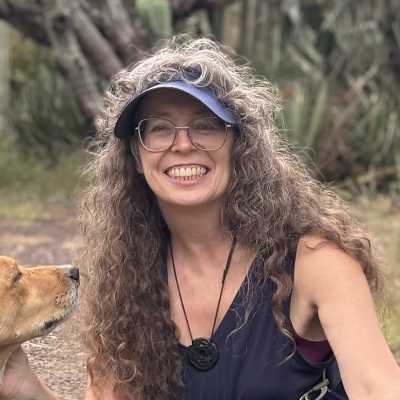
Imagine releasing decades of stored emotions and feeling truly at peace in your own body. Ann Hince has done exactly that—using awareness to shift her skull bones, grow close to an inch in her 50s, and transform her life from the inside out. She teaches listeners how to connect with their inner truth, release tension, and create lasting inner peace.




