The Real Reason You Can't Trust Yourself Anymore (It's Not Indecision)

When was the last time you made a decision, even a small one, and immediately started second-guessing it? Not because the decision was bad. Just out of habit, as if some part of you assumed you must have gotten it wrong. This week's episode names what's underneath that habit, and it isn't indecisiveness. It's the aftermath of something very specific: years of overriding your own signals to keep other people comfortable.
Kathleen opens with a story from her own life. Years ago, in the middle of a divorce, a woman she didn't trust asked to borrow her car. Her first instinct was no, she had a bad feeling, she knew how the car handled in snow, she knew she wouldn't be listened to. But the asking went on and on until she gave in just to end it. Within a mile, the car was in a ditch with a bent frame. The borrower cried, promised to pay, and vanished. Kathleen was left with the bill and with a harder question: when did she decide she didn't deserve to be heard?
That's the training, she explains. Every time you felt something was off and said nothing. Every time your gut said no and you did the thing anyway. Each moment was small, but stacked over years they taught you your own read on things isn't reliable enough to act on. Her reframe is the heart of the episode: self-trust isn't a personality trait. It's a body of evidence. Follow your instinct and it turns out fine, that's a deposit. Override it to keep the peace — that's a withdrawal. An empty account isn't a character flaw. It's just math.
It's also why the doubt is loudest over small things, why a client in her fifties, perfectly capable, needed everyone's permission before she could let herself go on a date. The rebuilding, Kathleen insists, starts exactly there: not with the career change or the relationship decision, but with the smallest choices. This week's practice is one small decision; what to eat, when to leave, whether to answer that message followed on first instinct, without checking it against anyone else's opinion.
She tells on her own circle with love, too. Her business partner spotted a woman in a grocery store and froze until Kathleen told him to just say hi and see what unfolded. He did, and they ended up dating. That's what a deposit feels like from the inside, she says: your shoulders drop back, your chest opens, there's a little dance in your footsteps, and you catch yourself thinking, who knew this was possible? Who knew I was the one sabotaging myself? The steps are small on purpose. Small is how the evidence stacks.
The episode then goes somewhere the script never planned. Kathleen shares how she used to make an appointment with fear on Friday at 3 o'clock and how fear never once showed up to the meeting. She talks about what her father's death revealed about the trauma still stored in her body, and she gives listeners outright permission to rest: take the day, be a bum, let the body do its healing, because the body has to heal too.
Self-doubt, she closes, isn't proof your instincts are bad. It's evidence of every time you overrode yourself and evidence can change, deposit by deposit. Her free webinar, "She's Tired of Being Strong" registration coming soon; details are in the show notes, along with the chapter list if you want to revisit the car story or the appointment with fear. You don't have to do this alone.

Author / Speaker / Coach
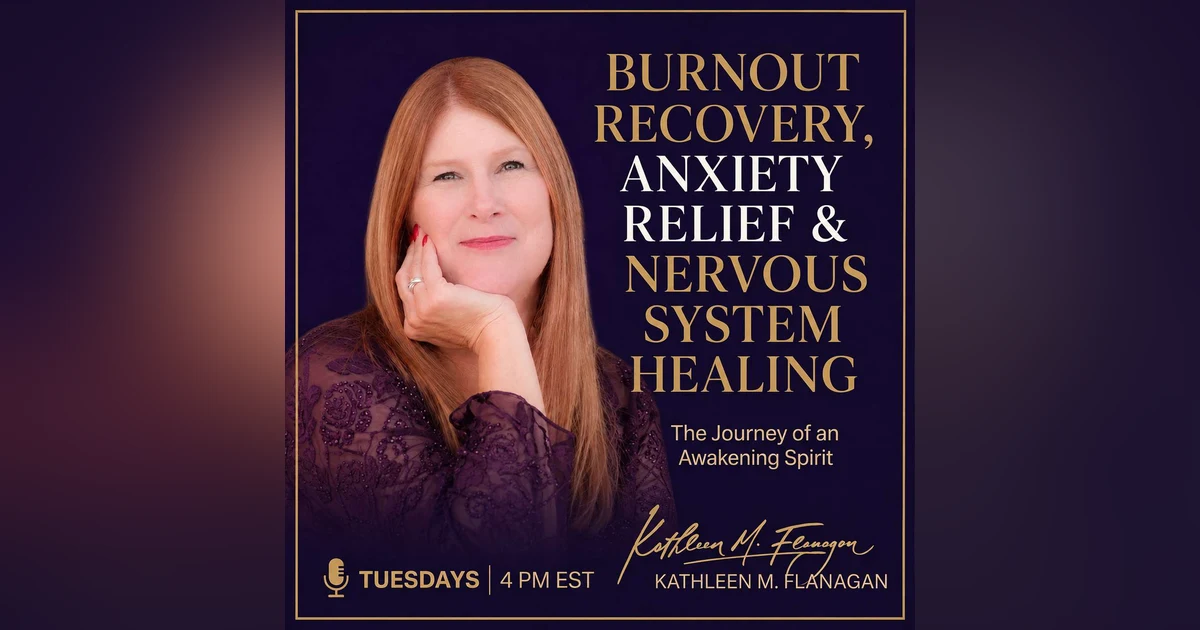
Kathleen Flanagan, is transformational coach, #1 Best Selling and international award-winning author of the Dancing Souls trilogy, and host of The Journey of an Awakening Spirit podcast.
She helps high-achieving men and women who seem to have it all together on the outside but secretly feel empty, unseen, and disconnected on the inside.
Through her own journey of trauma, healing, and spiritual awakening, she speaks with raw honesty and practical wisdom about moving beyond survival, releasing perfectionism, and reclaiming your authentic self. Her message is for those silently struggling behind the mask of success who long for wholeness, joy, and alignment with Spirit.
Kathleen brings powerful storytelling, soul-centered insights, and actionable tools that leave listeners feeling safe, inspired, and empowered to step into who they truly are.
This spiritual journey has been one of the most challenging and rewarding experiences of her life.

Why Saying No Feels Like Danger (It's Not Weakness)