The Real Reason You Feel Tired All The Time (It’s Not Burnout)

We’ve been taught to believe burnout means exhaustion.
That if we’re tired, overwhelmed, or unable to focus, the answer is rest, a vacation, or better time management.
But what if that’s not the truth?
What if the fatigue so many high-achieving women feel isn’t about doing too much but about living in survival for far too long?
That realization can be both unsettling and freeing.
For many women who look “fine” on the outside, successful, capable, responsible, the body has been quietly holding something else entirely. Long before the mind catches up, the nervous system remembers. It remembers being unsafe. It remembers having to stay alert, invisible, or in control just to get through the day. Over time, that constant vigilance becomes normal. The adrenaline becomes familiar. And eventually, the body pays the price.
The Real Problem Isn’t Exhaustion, It’s Survival Mode
Survival mode doesn’t always look dramatic. Often, it looks like productivity. Achievement. Pushing through. Getting things done no matter how tired you are.
Until one day, something shifts.
You may notice that when things finally start going well, when success is close, when momentum is building, your body reacts as if danger is near. You freeze. You spiral. You feel mentally scattered or emotionally overwhelmed. Not because you’re failing, but because your nervous system doesn’t yet recognize safety.
This is one of the most misunderstood experiences of growth.
When you’ve spent a lifetime protecting yourself, expansion can feel just as threatening as collapse. The body doesn’t differentiate between fear and excitement, it only knows intensity. And if your system has been trained to expect harm, even good things can trigger high alert.
That’s not weakness.
It’s conditioning.
Why Slowing Down Is Not Failure
One of the hardest moments in healing is the pause.
The moment when you know you’re close, close to clarity, alignment, or the life you’ve been working toward and yet your body says, stop.
This pause is often misinterpreted as procrastination or self-sabotage. In reality, it can be integration. Your system is catching up with who you’re becoming.
Rest, in this context, isn’t giving up.
It’s allowing your nervous system to recalibrate.
When you slow down intentionally, when you choose presence over pressure, something profound happens. Your shoulders drop. Your breath deepens. Your thoughts soften. You begin responding instead of reacting.
That’s not laziness.
That’s healing.
The Deeper Cause Many Women Never Address
For so many high-achieving women, the root isn’t workload, it’s unresolved trauma.
Not always the kind people talk about openly, but the quiet, formative experiences that taught you to stay small, stay strong, or stay silent. The moments where you learned it wasn’t safe to need, to trust, or to rest.
Until those experiences are acknowledged, not intellectually, but somatically, the nervous system remains on guard. No amount of productivity hacks or mindset work can override a body that still believes it’s in danger.
Healing begins not by forcing change, but by creating safety.
The Path Forward: Regulation Before Revolution
True transformation doesn’t start with doing more.
It starts with listening.
When you allow yourself to slow down, observe, and reconnect with your body’s rhythms, you create space for regulation. From that space, clarity returns. Energy stabilizes. Creativity flows again, not from urgency, but from alignment.
Small steps matter. One mindful pause. One gentle boundary. One moment of self-trust.
You are not behind.
You are not broken.
And you are not failing.
You are learning how to live from safety instead of survival, and that changes everything.

Author / Speaker / Coach
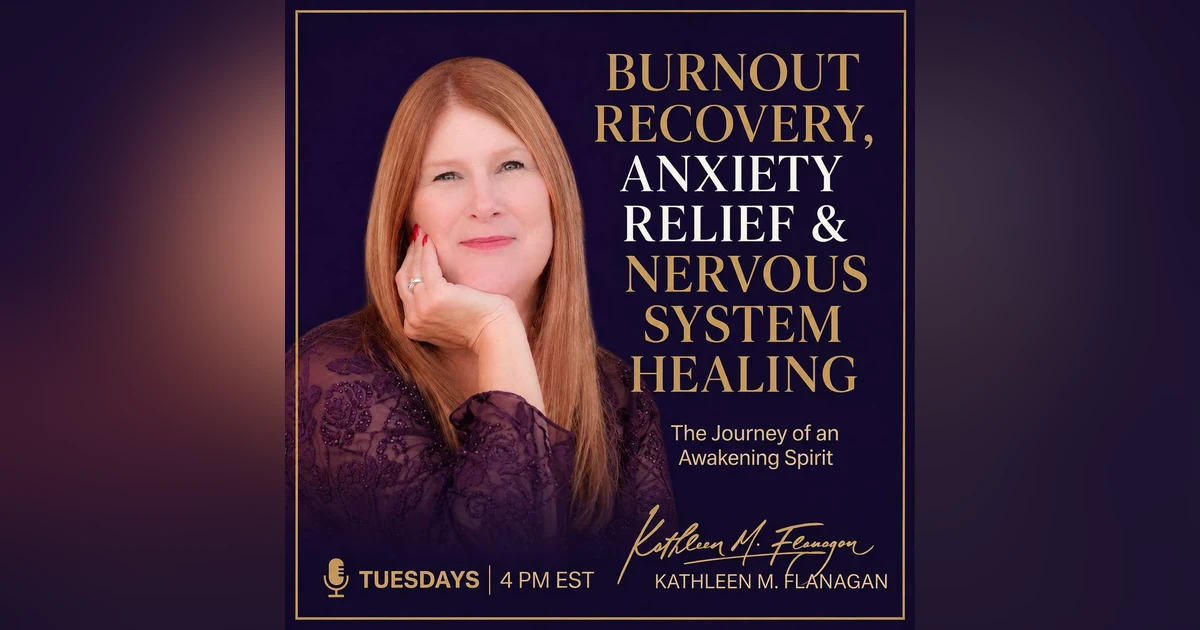
Kathleen Flanagan, is transformational coach, #1 Best Selling and international award-winning author of the Dancing Souls trilogy, and host of The Journey of an Awakening Spirit podcast.
She helps high-achieving men and women who seem to have it all together on the outside but secretly feel empty, unseen, and disconnected on the inside.
Through her own journey of trauma, healing, and spiritual awakening, she speaks with raw honesty and practical wisdom about moving beyond survival, releasing perfectionism, and reclaiming your authentic self. Her message is for those silently struggling behind the mask of success who long for wholeness, joy, and alignment with Spirit.
Kathleen brings powerful storytelling, soul-centered insights, and actionable tools that leave listeners feeling safe, inspired, and empowered to step into who they truly are.
This spiritual journey has been one of the most challenging and rewarding experiences of her life.

The Real Reason You Can't Trust Yourself Anymore (It's Not Indecision)